Are You A Leader Worth Following?

Depending on who you ask, thoughts on what a leader is could vary widely. Some leaders are quiet, while some can be more outgoing. There are some leaders that are charismatic, while others could be boorish. No matter the characteristics, the success of any school rests on its leadership.

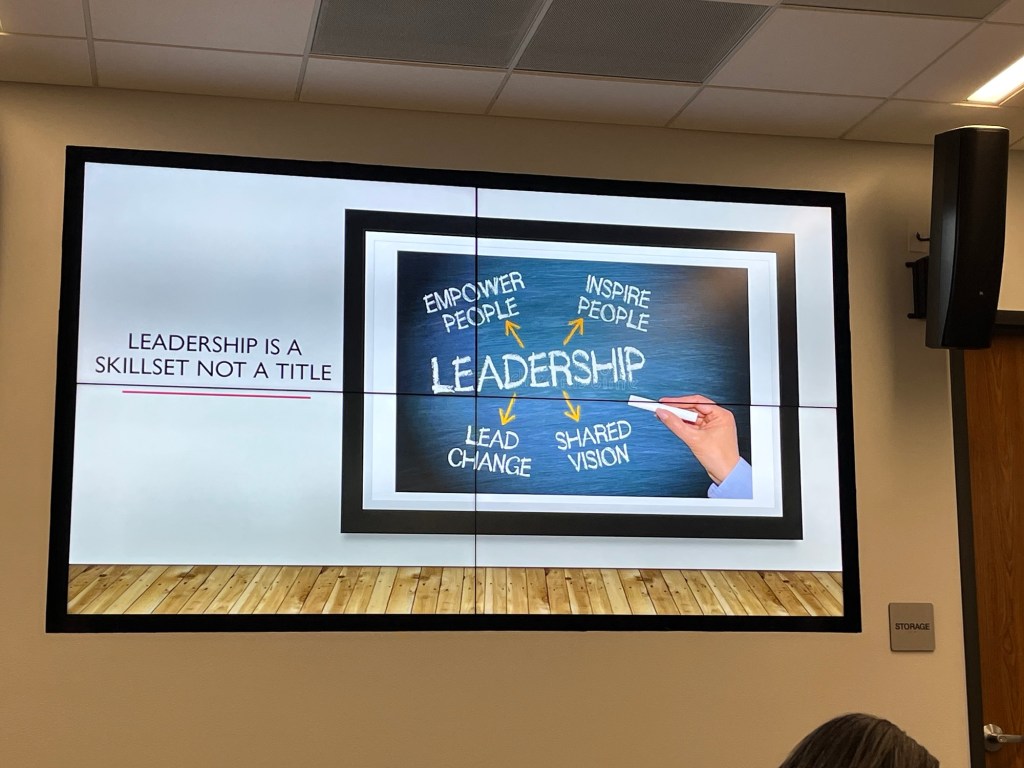
Leadership is defined as the ability of an individual or a group of people to influence and guide followers or members of an organization, society, or team. Leadership is multifaceted and requires certain skill sets. Working in education, most of us have experienced varied styles of leadership. We all have leaders that we really enjoyed working alongside and others that we would rather not have known. Let’s dive into a few things that strong leaders do. This is by no means exhaustive, but rather a glimpse into effective leadership.

Leaders, how are you engaging with students during arrival? Are you outside of the entrance of the campus greeting students, staff, and parents? Are you paying attention to the verbal and nonverbal cues of each individual entering the building?

How do stakeholders respond to you? What are your conversations like as you make your way around campus? Are people receptive to you or do they try to avoid you? What are your relationships like with the people in your building?

Do the teachers on your campus respect your opinions when it comes to instruction? Are you regularly visiting classrooms and providing teachers with feedback relative to their instruction? Are you actively involved in the PLC process? Are you providing the resources teachers need to be successful?

How well do you handle stressful situations? Can your team depend on you to remain calm when there are multiple situations arising concurrently? How well do you delegate responsibility? Do you micromanage or do you trust those that you have put in charge of systems?

This discussion could go on infinitely, because there are so many complexities when it comes to leadership. Ask yourself, am I doing what’s best for the people that I have been called to lead? Are you doing things that garner good will and encourage people to want to follow you? Are you a leader worth following?

A Love For People

Love is defined as a quality or feeling of strong affection for and dedication to another. Another definition states a warm attachment, enthusiasm, or devotion. Love often involves empathy, support, and a desire for the wellbeing of others. A love for people is a quality needed for leaders.

Being an administrator is not an easy task. There are so many competing interests that can completely overwhelm you and block the work that needs to happen. During the difficult days, what is the driving force behind what you do?

How you show up for people matters. Listening to that parent complain about their students grades or some other issue, conversations with students about their decision making, providing feedback to a teacher on something that you observed in a classroom, and speaking with a custodian about a building issue. The things that you do daily as a school leader sets the tone for those that you serve in the building.

Showing people that you are concerned about their wellbeing is a characteristic of a good leader. The level of care that you give to staff and students dictates the measure of trust that they have in you. How do people respond to you when they see you around campus? Are they receptive to you or does their body language suggest that they don’t want to be around you?

Being genuine in all that you do draws people to you. You can only pretend for so long before your authentic self is revealed. Kindness, empathy, vulnerability, and dependability from a school leader can set teachers and students on a path for success.

Having respect for everyone within your school building is an important part of your leadership. Every person that walks into your school has value that is added into the culture of your campus. You should do your best to keep this at the forefront of your mind during daily interactions.

Having a love for people does not mean that you don’t hold them accountable. When you care about people, you want them to be successful. We have to hold those that we lead accountable for their actions. This involves feedback, collaboration, delegation, and encouragement.

Good leadership involves a high level of care. Our students and staff need to know that we are in their corner. Leaders have to show a level of respect and commitment to those that they serve. How are you showing your love for your school community?

Much Needed

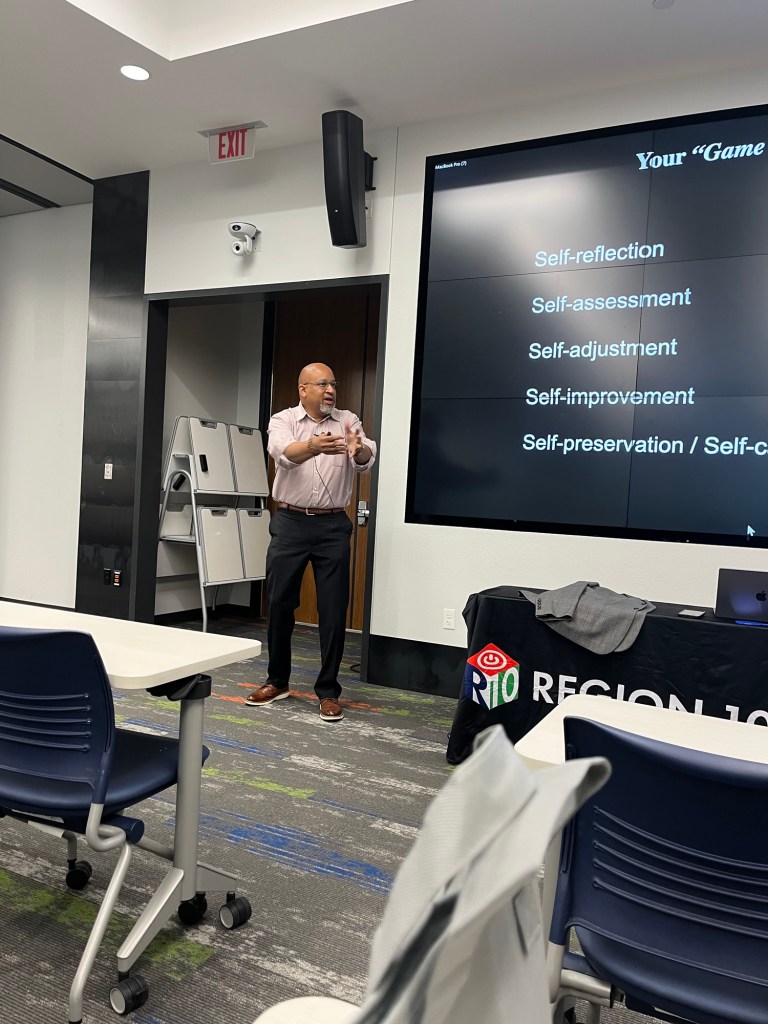
Yesterday was amazing. I invested in myself by attending the Innovative Principals Conference that was put together by the Region Ten Education Service Center. This turned out to be a great way to invest in myself and my professional development. It was awesome to be surrounded by people that have the same love for leading that I do.

This school year has been stressful in a few ways. Our school community has undergone quite a few changes. For starters, we added around two hundred new students to our building. In addition to the new students, we added twenty new staff members. We are also implementing three new curriculums. The cherry on top is a new Principal that started a month after the start of the school year. I needed a break!

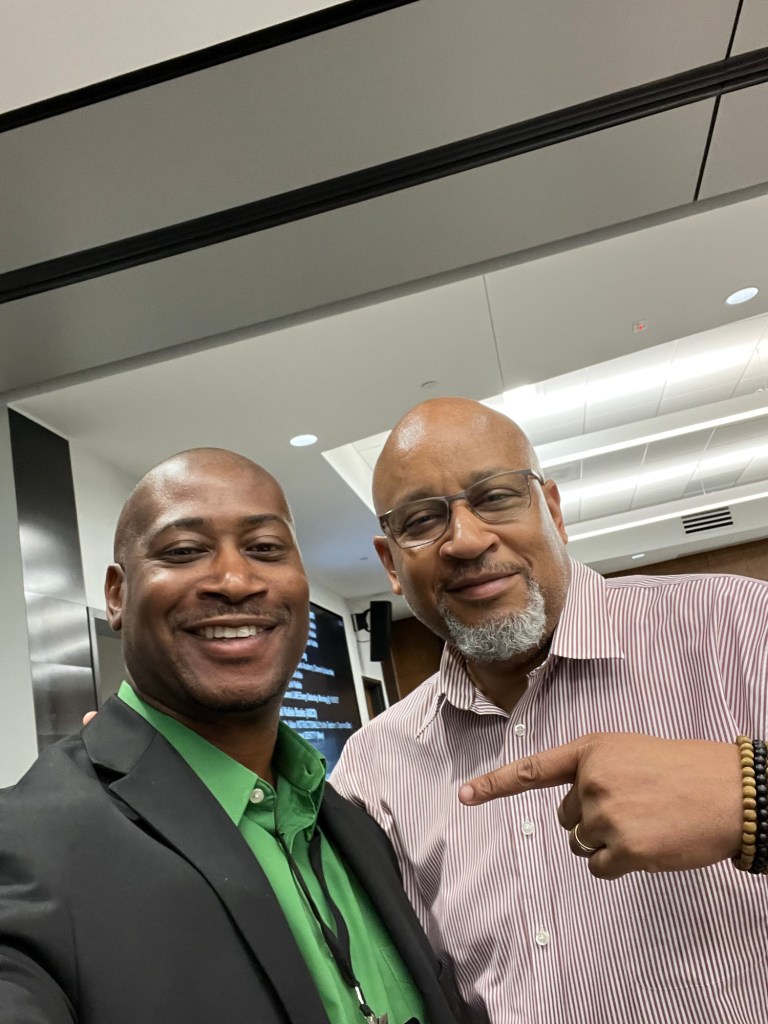
Much to my surprise, we were blessed to be able to learn from Principal Kafele. I was not sure if he was going to do the keynote virtually or in person. I was happy to learn that he was in the building. This was already worth taking the day off and the travel time to get there.

If you don’t know who Principal Kafele is and you are a leader in education, you need to check out his work. I have been following him for eight years. His work in regards to leadership in education is unmatched. His wisdom and knowledge of educational leadership is the reason I am where I am today.

After the keynote I attended three other sessions on various topics. Being able to get validation on things that I am currently doing and adding new tools was awesome. I had several conversations with others that are doing the hard work of leading schools. I also had the pleasure of learning from one my colleagues from the district I currently serve in.

The Innovative Principals Conference was a great experience. I am thankful to Region Ten for their work in organizing this event. I am looking forward to the long weekend to rest and rejuvenate. Work is being pushed aside temporarily to enjoy some fun with my wife at a concert and the state fair. Until next time, take care.

Athletic Coaches Are Some Of Our Best Educators

At some point in our lives we all have had interactions with coaches. Some of us are familiar with the coach that seemed to not care about the classes that they had to teach, but was serious about athletics. The other end of that spectrum were coaches that took their content classes as serious as their athletic classes. When you think about it, coaches really are some of our best educators.

If you’ve spent time observing coaches, there are elements of athletic practice that directly relate to classroom instruction. Look closely at the progression of a team from the beginning of a season to its conclusion. The improvement that is seen is not an accident, it is the direct result of a cycle of instruction, feedback, and practice.

The same way that teachers provide direct instruction in a classroom, coaches provide direct instruction on the field, court, or pitch. After that instruction students have an opportunity to practice, much the same way that an athlete practices what they have been instructed to do. During the practice, coaches are continuously providing feedback. The same should be happening in a classroom. As students practice what they are learning, teachers should provide feedback to help students progress towards mastery.

Teachers make adjustments to instruction to meet students at their level of achievement. Coaches make adjustments to accommodate a student athletes skill level and ability to perform. These adjustments help to achieve the desired outcome, which is student achievement.

Every educator should be working to ensure that students receive a quality education. Students will rise or fall to the level of expectation of their teachers. We must do our due diligence to make sure that we give students the chance to make the most of everyday that they are in our care. What say you? Will you approach teaching your content area like a coach?

Let’s Go!!

As the new school year approaches there are various tasks that need to be completed. Class rosters are being finalized. Campus procedures are being reviewed by campus leadership teams. Custodians are busy preparing the campus to receive teachers and students. The promise of a new beginning is upon us.

I hope that you have had a chance to relax and recharge this summer. You need to be at your best for the impending marathon. Your mental and physical health is paramount to achieve your personal goals and to contribute to your campus’ goals.

Celebrate your wins. Reflecting on your previous years, I’m sure that you can think of several things that went well during the school year. Building on those successes will help propel you through. Yes, every school year is different, but there are elements of success that are the same.

Teachers, your students level of achievement depends on you. Yes, there are outside factors beyond your control, but you must have the belief that your skill set is exactly what your students need to achieve. Every student in your charge deserves the very best education. Everyday counts, please make the best of your instructional time.

School leaders, your vision is needed. The campus that you serve needs your leadership. Your support of teachers, staff, and students is an important component of your school’s success. Provide actionable feedback, build authentic relationships, and lead with integrity.

I know it sounds cliche, but our children truly are our future. They need every adult stakeholder to provide support and a safe learning environment. Students need encouragement to be curious and guidance to solve problems. Let’s make the 2024-2025 school year one to remember for all of the right reasons.

Twenty Years….

I am entering my twentieth year working in public education and I’ve spent some time reflecting on my journey. It’s incredible to think back on the many successes and some struggles that have molded my career into its present state. There are a few people that have given me a helping hand along the way, and I am forever grateful to them. Come along with me as I share some of my story.

I am not one of those people that grew up wanting to be an educator. I was reading a magazine in sixth grade and came across an article about an electrical engineer. For whatever reason, this stuck with me and I decided that I was going to become an electrical engineer. I don’t recall a single conversation with my high school counselor about my plans after graduation. This is indicative of the school I went to and maybe the expectation of a middle of the pack black teenager from my hometown.

I attended Grambling State University, where I majored in Electronics Engineering Technology. There were classes with a lot of theory and formulas, but not nearly enough hands on learning. Needless to say, I did what I needed to do to get by, but there was no passion or clear path forward.

I remember during a study session for Physics one of my classmates told me that I had a knack for explaining things in a way that made sense. Later that evening a thought hit me like a Mike Tyson right hook, I wanted to become a teacher. I was approaching my last year of coursework to graduate with my engineering degree and there was no way I wanted to stay in school longer than I needed to. I pushed through and earned my Bachelor of Science degree, but the thought of being an educator never left my mind.

Upon graduation, I moved to Texas. I did have a couple of jobs before I came across a way to get closer to my dream. I started an alternative certification program to become a teacher. I worked extremely hard to complete the program while working as a substitute teacher and retail employee.

One morning, after helping to complete a floor move at the department store where I worked, I decided to go to a campus where I subbed frequently during the school year. The principal so happened to be there because he had a teacher resign and was beginning to try to find a replacement. I explained why I was there and he offered me an opportunity to interview. I interviewed with him a couple of days later and was offered a position as an Accelerated Math teacher.

I served the next six years at the same school as a Math teacher and team leader. After some uncertainty in education funding, I was transferred to a different middle school in the same district. I would go on to serve another six years as a Math teacher, team leader, and helping rewrite the district’s Math curriculum.

During the summer of 2017, I received an unexpected phone call to interview at an Elementary campus. The position would be a mix between a counselor and an Assistant Principal. Although I was nervous about leaving the classroom, I agreed to interview. After two weeks of waiting, I was offered the position. During the next school year, I was responsible for campus discipline, serving as the campus 504 liaison, and various other duties.

The following year I was moved into a fourth grade Math teaching position because the Principal decided to not spend Title I money for my salary. This was hard for me because I had never taught elementary and I considered it a step backwards for my career. I spent the next two years teaching fourth grade and becoming a better educator in the process. My time spent on that campus also came with extreme frustration for reasons I will not discuss. After fifteen years serving the same district, I decided that I needed to try to make a change for my advancement.

That summer, I began to apply for administrative positions in different areas. I had a chance to interview with one district which lead to an interview for an Administrative Associate position. I was offered the position, which led to a big change for me. I would be starting a new path in a new district that was a forty-five minute drive from my home.

I had the opportunity to learn from administrators that had many years of experience. I enjoyed my time as an Administrative Associate. This was to be a two year assignment. The summer after my first year at the new campus, I began applying for Assistant Principal positions. I figured why not since I still had a full year to secure a position.

A month before the new school year was set to begin, I received a call to interview for an Assistant Principal position in one of the district’s that I applied to. This was a surprise because I applied for the Assistant Principal pool. I happily accepted. I completed a screener interview with the campus Principal and Assistant Principal and a formal interview two days later. After meeting with the school district’s Associate Superintendent, I was offered an Assistant Principal position.

Earning an Assistant Principal position had been a six year journey at this point. I have excelled in my position and am continuing to learn and grow. This school year will be my fourth in my current district. I have had some challenges but my experience has been overall good. My next goal is to become a campus Principal.

There are a few people that I must thank for the role that they have played in my career thus far. My wife, who has always seen more in me than I do in myself. Anthony Sims, who afforded me the opportunity to become an educator. Dr. Shaun Perry, who gave me the opportunity to become the first black male team leader on his campus. Janet Cephas, who spoke my name to a Principal for a career opportunity. Lastly, Amber Brooks who interviewed me and offered for me to join her team as an Assistant Principal.

My career has brought me a great sense of accomplishment. I am looking forward to what the future holds. I am excited to begin a new school year serving students, teachers, parents, and staff. It is a blessing to be able to have a career where I feel I’m truly operating in my earthly calling. Who knows, maybe I’ll still be going strong in another twenty years.

A Love For People

As you get older, you realize that people can and will disappoint you. How do you move past this realization? In reality, you need people working together to achieve goals. How do we balance understanding the nature of human beings and the betterment of our organizations?

Being an educator means that the bulk of your work is centered around interactions with people. This ranges from fellow educators to students, parents, staff members, and community stakeholders. Interpersonal skills are paramount in our profession. As we all know, dealing with people can sometimes be tricky.

Education leaders are tasked with serving a wide variety of people with diverse personalities. The best leaders have the ability to serve educators on an individual level. The same way that teachers should provide each student with what they need to be successful, leaders should take that same approach. With the many responsibilities that school leaders have, is this possible?

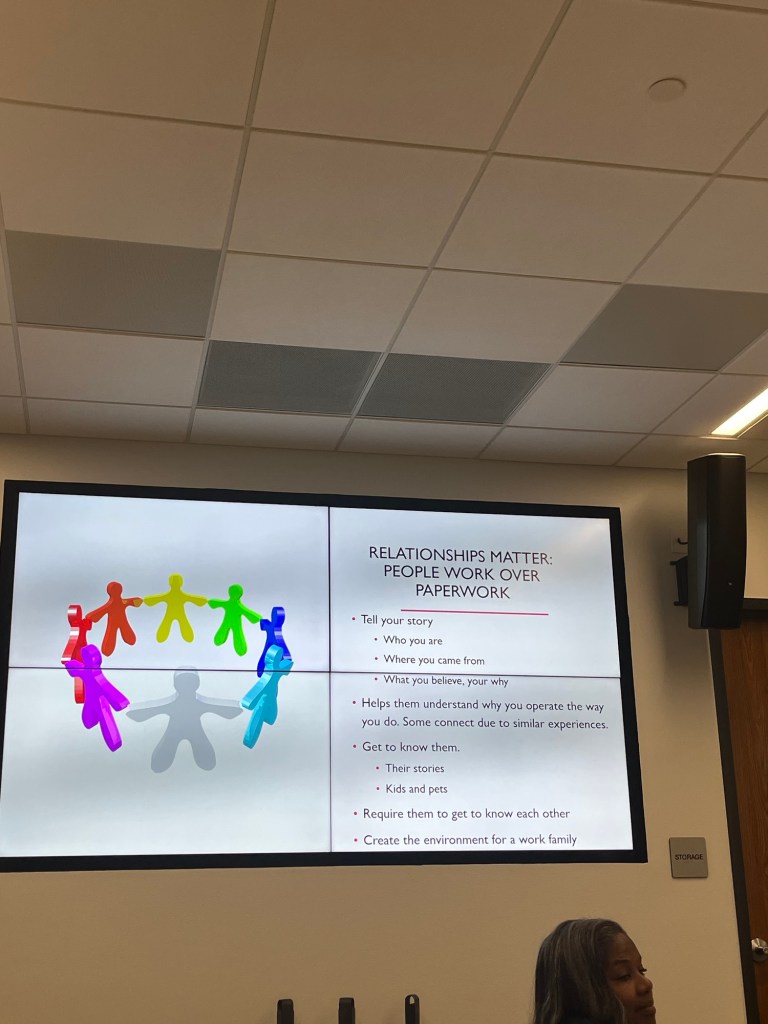
The answer is unequivocally, yes. It takes time building relationships and knowing the needs and concerns of those that you serve. This requires multiple conversations, not just about what’s going on in the school building, but what’s happening in their personal lives. You also learn a lot about your teachers when you are frequently in their classrooms observing instruction.

Classroom observations give you a clear picture of instruction and classroom culture. These are also opportunities for constructive feedback and sharing areas of growth. When you are present in classrooms as a building leader, feedback, oftentimes, is more well received by teachers. This also gives you an opportunity to find out what resources are needed to help teacher growth.

Everything in a school building rises and falls on the shoulders of leadership. Having a love for what you do and the people that you serve will make you a better leader. If people sense that you don’t like what you’re doing, why should they follow you?

When you love what you do, you don’t have to go around saying it. It will be evident in every facet of your everyday existence. The quality of your work shows it. Your approach to challenges shows it.

Your love for what you do shows up in your everyday conversations with teachers, staff, students, and parents. Can your stakeholders see that you enjoy your work? Are people genuinely happy to see you at arrival, in classrooms, hallways, the dining hall, or dismissal?

Summer is here and you more than deserve your break. At some point, analyze how your school year went. Did you finish strong, or were you feeling as if you could not take much more? I encourage you to think about what energizes you during the school year. What things do you enjoy about your work? Whatever it is, do more of it.

I am in no way minimizing the task that is at hand for educators. The work is hard, but I am encouraging you to not have a victim’s mindset. Find what works for you and people that will help you along the way. Rest up and enjoy your summer!

Bloom Where You’re Planted

The education world is knee deep in hiring season. Educators across the country are making decisions for the following school year. Administrators are living in two different worlds; finishing one school year, while planning for the upcoming school year. Many educators are also trying to makes decisions regarding their careers. Hard decisions will need to be made in the coming weeks.

No situation is going to be perfect, that’s just the nature of things. Oftentimes, people’s professional needs grow and change, necessitating a longing for change. Family dynamics, living arrangements, health, and financial reasons could all play a part in career decisions. The reasons vary from person to person.

When you’ve worked in a school district for a long period of time there could be advantages. Being in the same place for a while could also be a hindrance. You develop a network of people that know you and have developed opinions about who you are professionally. Sometimes this can be good, but it could also limit opportunities.

Educators should always seek growth opportunities. Many districts provide various offerings for professional development. How educators approach these options makes a difference. Taking full advantage of professional development adds tools to their repertoire and makes them more marketable.

With the current state of education, things can seem unsettling. There is more uncertainty around people’s employment prospects. This is causing some uneasiness. Decisions are being made based on experiences in educators current working environments.

I am sure that you’ve heard the saying “be where your feet are”. This means that there is a need to be present in your current situation. Even if your current assignment is not working for you, there is value in every experience.

My advice is to continue to learn and grow. Use the knowledge and skills that you have obtained to leverage your next position. Take every opportunity and look at it as a chance to market yourself. You never know what could happen. I have taken the attitude that I am right where I need to be. I am constantly looking for ways to improve myself and do not shy away from new opportunities.

If you work for a district that pours into you, that is a good place to be. If not, you have to take the initiative to grow professionally. Your growth is non negotiable. Until there is an opportunity to move on, please find ways to better yourself and make the best of your situation.

But That’s How We’ve Always Done It

Routines often bring us comfort. There is a feeling of confidence when we know what to expect in places that we frequent. When we need to relax there’s nothing better than settling into a routine that will bring you the peace that you desire. Our schools often settle into systems and processes that have been used for decades. In some instances, change is a good thing.

If anything positive came from schools being forced to close in 2020 it was a change in how instruction was delivered. We were forced to embrace technology more than ever. Teachers had to be creative to ensure that students were learning even though they were not in a classroom.

In my opinion, there are ideas and systems that need to be altered. Just because something has worked for years does not mean that it cannot be improved. Everything around education is changing, what can we do to keep pace?

What can we do to better educate the students we have in our schools right now? What can be done to fight against attendance issues? While I don’t have many answers, I do believe there are things we can do to make our schools better for kids and adults.

Classroom instruction seems to be lacking when it comes to keeping students engaged. I’m not one of those people that thinks students should be entertained constantly, but nobody wants to be bored out of their minds all day. There are so many apps and programs that can be used to increase engagement, why not make the best use of them. Sprinkle in direct instruction, individual work time, cooperative learning activities, and technology and there you have it.

For as long as I can remember, there has been a “boot camp” to prepare for state testing. Often, this stretches for two to three weeks. I’m all for preparing students for state assessments, but our model, in my opinion, does more harm than good. Yes, there are several engaging ways to review, but the length of time is brutal.

While we’re talking about state assessments, I would love it if we had strong representation in our education department to do away with one test being how school achievement is measured. I’m not against assessment, but a change is long overdue. Most schools use MAP testing to measure student growth. Why is this not the most important thing in the eyes of state stakeholders? I tire of our students being used as political pawns while someone that truly does not care about education gets rich.

Meetings are another area that could use improvement. I know meetings are necessary, especially for school leaders, but can we keep meetings to thirty minutes or less. The way most meetings are run, there is no processing time. Agendas should be shared at least a day in advance and someone should keep the group on track.

There are good things happening in our schools. There are also some practices that we held on to for adult comfort. All systems can be improved, especially if the benefit is helping students to be successful. What are some things that you see in your school that can be improved?

Yelling At Kids Doesn’t Work

We’re approaching the time in the school year where things can begin to get tense. Students are going into their Spring mode as far as behavior is concerned. Teachers are approaching exhaustion. Needless to say, tensions can sometimes be high. Even though frustration can sometimes set in, yelling at students will not elicit the correct response.

I don’t know anyone that likes to be yelled at. Over the years I have witnessed several students who have come into school upset because their morning got off to a rough start. Maybe the student did something that their parent asked them not to do. Maybe they were moving too slow getting ready for school.

Whatever the reasons, an upset student is a student that is not ready to learn. Compound this with a teacher yelling at the same student and you have a possible explosive situation. There is a need for adults to be able to help students navigate these situations to facilitate a productive day.

As adults, we need to remember that students have feelings too. They deserve to be treated with respect. I know that there are instances when students yell at adults. In these situations you have to remain calm. The other students are watching how you will respond. The last thing you want to do is lose composure and say or do something that you will regret.

Our students have not reached their full mental capacity and can sometimes make decisions that are harmful. We need to be cognizant of this fact and guide them to think about their actions. Mutual respect will get us farther than intimidation.

Am I guilty of yelling at students? Once upon a time when I was a young teacher trying to figure things out, yes. Experience has afforded me the opportunity to gain knowledge and add tools into my repertoire. To be clear, there’s a difference in raising your voice to get students attention and yelling to try to get compliance.

Teaching is very relational. When the relationship is damaged in some way there has to be reconciliation. Young people, most times, are resilient and forgiving. We, as adults in education, have to be brave and vulnerable when we have wronged students in any way. You can catch more bees with honey than with vinegar.

Design a site like this with WordPress.com
Get started